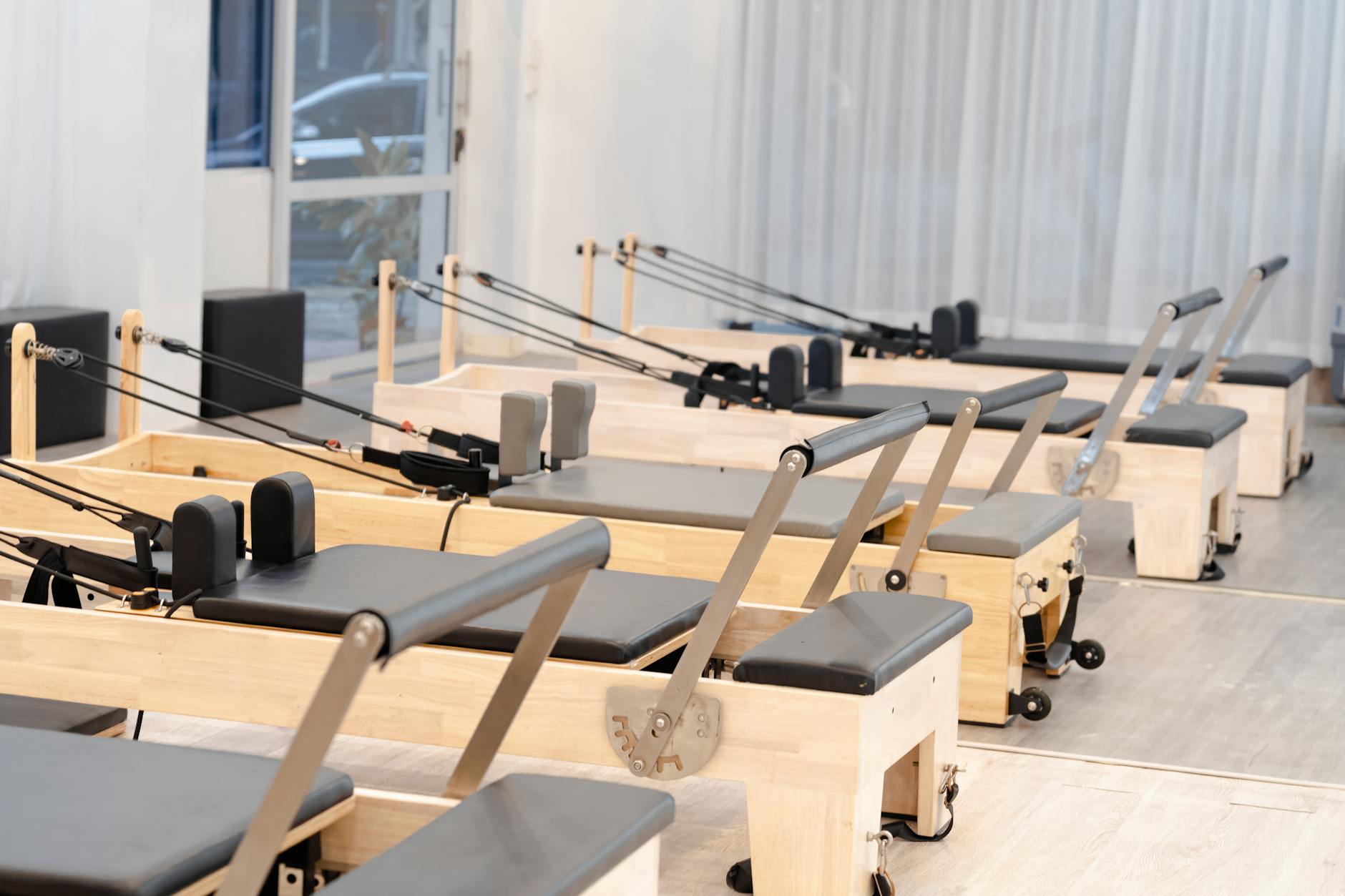
The Pilates Reformer is one of the primary pieces of equipment in the Pilates method. Invented by Joseph Pilates in the early 20th century, the Reformer was designed to help people build strength, flexibility, and control while recovering from injuries or improving overall fitness. It features a bed-like frame with a sliding carriage, springs for adjustable resistance, and straps or bars that allow for a wide range of exercises targeting every muscle group.
Originally created as part of Joseph Pilates’ exercise method and rehabilitation work with injured dancers in his New York City studio, the Reformer was a vital tool in a system he called Contrology—the practice of moving with precision, balance, and breath awareness. Over time, the Reformer has been adapted for modern studios, now commonly found in wellness centers and boutique fitness facilities around the world.
Compared to Mat Pilates, the Reformer offers unique advantages. While Mat-based Pilates relies primarily on body weight and gravity, the Reformer provides both resistance and assistance through springs, making exercises more accessible yet more challenging. The equipment can support alignment, assist with advanced movements, and intensify strength training, offering a broader range of adaptations than on the Mat alone.
Who should not do the Reformer?
While the Reformer is safe for many people, there are certain situations where caution or medical clearance is needed. Here’s an overview of who may not be suitable for the Reformer (or should consult a healthcare provider first):
1. Acute Injuries or Post-Surgery
- Anyone recovering from recent surgery, fractures, or acute musculoskeletal injuries should avoid Reformer work until cleared by a doctor or physiotherapist.
- Movements can strain healing tissues or hardware (like pins, screws, or joint replacements).
2. Unstable Medical Conditions
- People with uncontrolled cardiovascular conditions, severe osteoporosis, or advanced arthritis may be at risk with certain loaded or weight-bearing exercises.
- Those with neurological conditions (e.g., Parkinson’s, multiple sclerosis) may need modifications and supervision.
3. Severe Osteoporosis
- Exercises involving flexion (forward bending), twisting, or resistance under load can increase the risk of vertebral fractures.
4. Pregnancy (without guidance)
- Reformer Pilates can be wonderful during pregnancy if tailored by a trained prenatal instructor. However, some movements, especially lying flat on the back after the first trimester or exercises requiring strong abdominal compression, should be avoided.
5. People with Balance or Mobility Limitations (without supervision)
- Because the Reformer is a moving carriage, those with poor balance, dizziness, or mobility issues may be at risk of falling or straining themselves.
6. Anyone Without Proper Instruction
- The Reformer looks simple but involves springs, straps, and moving parts. Without guidance, a higher risk of injury persists.
Bottom line: Most people can benefit from the Reformer, but if someone has a medical condition, recent injury, or is pregnant, they should obtain clearance from their healthcare provider and train in a reputable studio that offers comprehensive instructions by certified Pilates teachers.
More on Why Pilates has Become So Popular
Subscribe now to stay up-to-date on the latest!
Disclaimer: Participation in exercise programs of any kind is at the discretion of the reader. Consultation with a medical professional is advised.
This text was generated (in parts) by OpenAI’s language model, ChatGPT
Leave a Reply