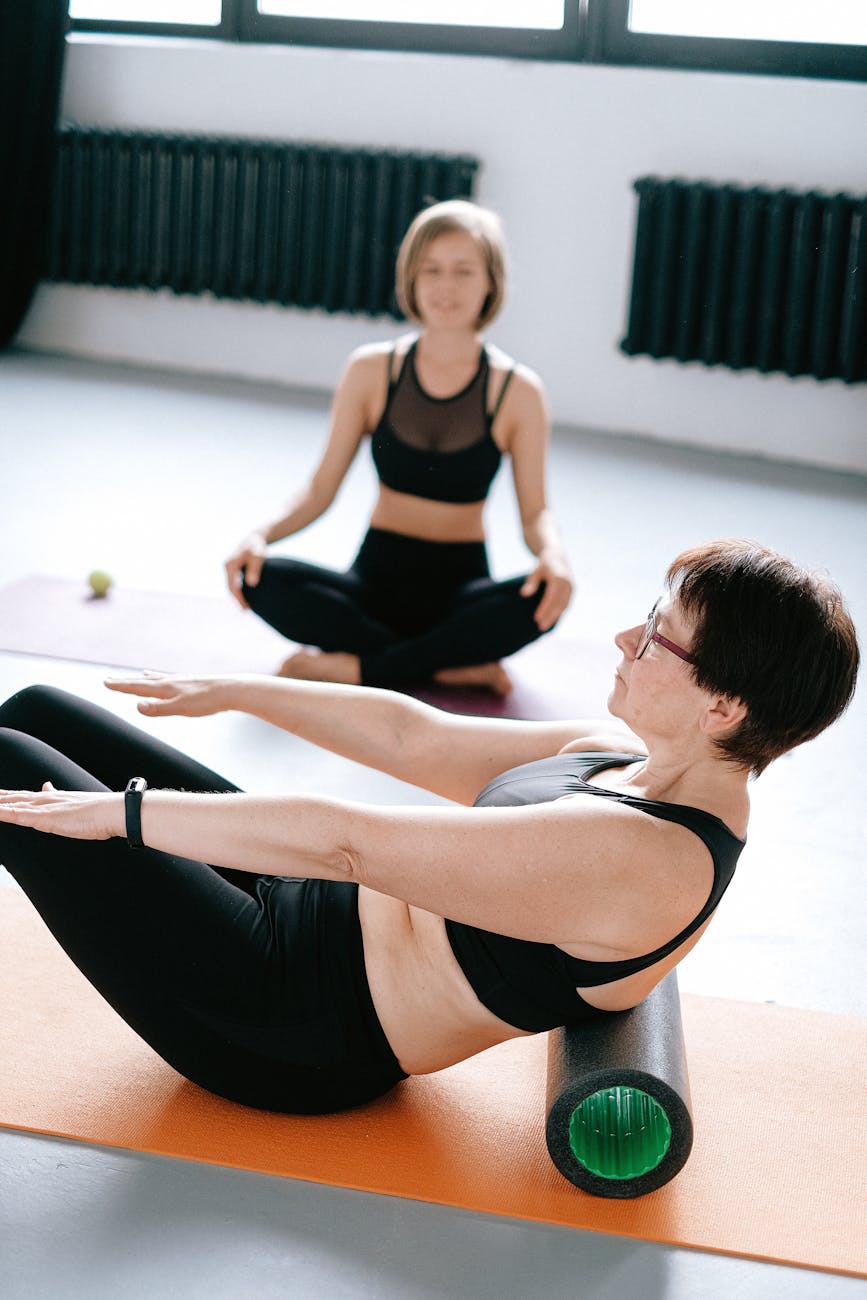
Stress has become a baseline state for many. Constant stimulation, digital overload, and fast-paced living keep the nervous system in a prolonged state of activation—often without conscious awareness. This is where Pilates offers something uniquely valuable: a pathway back to regulation.
Unlike high-adrenaline workouts that can further stimulate the system, Pilates operates differently. Its emphasis on controlled movement, breath coordination, and mindful pacing supports a shift from the sympathetic (“fight or flight”) state toward the parasympathetic (“rest and restore”) response.
Breath is central to this process. In Pilates, lateral ribcage breathing encourages expansion through the thoracic spine while maintaining core support. This type of breathing not only enhances movement efficiency but also has a direct calming effect on the nervous system. Slow, intentional breathing signals safety to the body—an essential step in reducing stress and anxiety.
The structured nature of Pilates also plays a role. Predictable sequences and focused attention create a meditative quality in motion. Rather than dissociating or “checking out,” practitioners are guided to become fully present in their bodies. This presence alone can interrupt cycles of rumination and mental fatigue.
Additionally, Pilates emphasizes grounded, gravity-based movement, which can be particularly regulating. Feeling supported by the apparatus—or even the mat—provides sensory feedback that helps the body recalibrate and settle.
Over time, consistent practice builds more than strength. It cultivates resilience within the nervous system, improving the ability to respond to stress rather than react to it.
In this way, Pilates becomes more than exercise—it becomes a form of moving meditation, offering a practical and accessible tool for navigating the demands of modern life.
More on How Mindful Movement Calms the Body
Subscribe now to stay up-to-date on the latest!
Disclaimer: Participation in exercise programs of any kind is at the discretion of the reader. Consultation with a medical professional is advised.
This text was generated (in parts) by OpenAI’s language model, ChatGPT
Leave a Reply